How to Prevent Hair Damage: Conditioner, Detangling and Daily Care
Cleanse the scalp, condition the lengths and remove repeated strain from the moments that make ordinary grooming difficult.
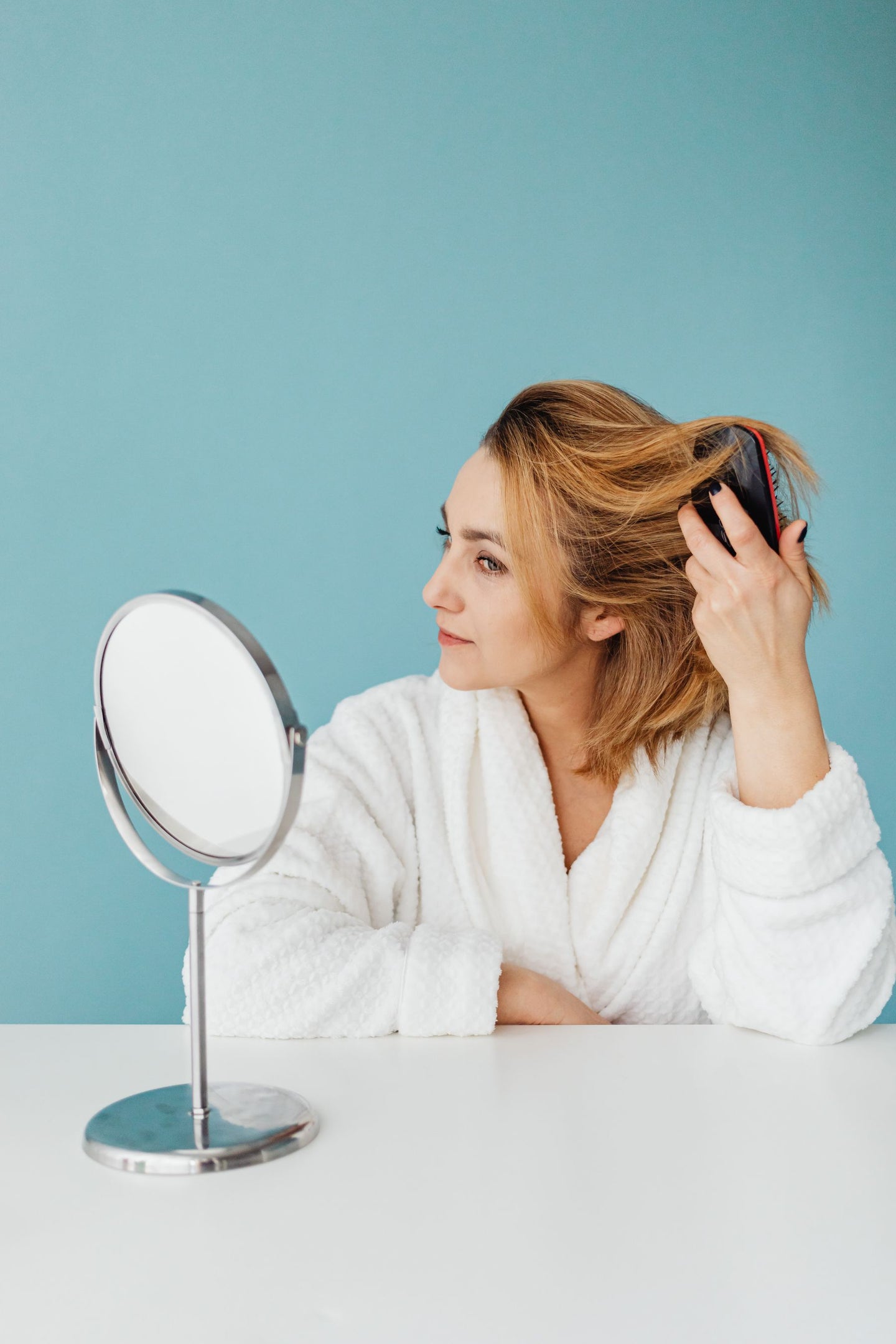
You can reduce avoidable hair damage by making washing gentler, conditioning the lengths, reducing heat and removing repeated tension from styles. These choices help protect hair shafts and, in the case of traction, reduce stress on follicles. They do not prevent every form of hair loss. Gradual inherited thinning, sudden shedding, patches and painful scalp changes need their own explanation. A good prevention routine combines sensible care with attention to the kind of change you are actually seeing. Care practices for fragile hair.
Find where your routine asks too much of your hair
Start with the moment that creates the most pulling. It might be combing a dense tangle after washing, tightening a ponytail for work, brushing repeatedly to make a part look smooth or removing an adhesive style. Choosing one high-friction moment is more effective than buying several products and keeping the same handling habits.
Breakage and shedding are different observations. Hair shafts can snap along their length, leaving uneven pieces and making fullness harder to maintain. Hair can also release from follicles as part of a shedding process. Consumers cannot reliably identify every mechanism from one strand or a photograph, so use what you notice to guide a better history: short broken pieces, more complete hairs during washing, a progressively wider part or discomfort at the hairline.
Keep the scalp and the lengths as separate care areas. The scalp needs appropriate cleansing and attention to symptoms. The lengths need handling that minimizes friction, tangles and repeated stress. Applying a scalp leave-in over the outer hair instead of the skin does not solve either task well; applying harsh handling to the scalp in search of a “deep clean” adds another problem.
Daily care reduces avoidable damage; medical hair-loss causes need their own assessment and treatment plan. Gentle handling helps protect fragile strands, while scalp cleansing removes oil and residue. A clean, comfortable scalp can still develop pattern thinning or alopecia areata, so a wash routine alone cannot prevent every cause of hair loss. Keep two jobs visible when choosing care: protect the hair you handle each day and address a diagnosed cause through the appropriate pathway. Use the AAD hair-care recommendations for handling and the diagnosis and treatment guidance for cause-specific assessment. The Folivis treatment-options guide connects those pathways with the questions to discuss.
Build a wash that cleans without becoming a pulling session
Choose the wash interval around oil, sweat, styling residue, texture and your daily life. A schedule that leaves your scalp persistently uncomfortable or makes detangling a major event needs adjustment. There is no single wash frequency that describes every hair texture and lifestyle. If you have a medicated wash, its instructions belong in that schedule too.
Apply shampoo to wet hair and scalp, distribute it with fingertips and rinse thoroughly. You do not need your nails to feel that the scalp has been washed. Avoid repeatedly rubbing the lengths together into a knot. Conditioner helps the hair become easier to manage, especially when the lengths are fragile. Conditioner placement and hair texture The American Academy of Dermatology emphasizes gentle shampooing, conditioning and detangling for people with thinning hair. Washing and conditioning evidence.
Seeing released hairs during washing can make you postpone the next wash. Then the next collection may appear more alarming because more days have passed. Record the wash interval if you are comparing amounts. At the same time, take a sustained change seriously: a washing habit does not explain every increase in shedding. An illness or another trigger months earlier can be relevant. Shedding timeline.
Make detangling a controlled step
Use the tool and stage of detangling that suit your texture and the product instructions. Work in manageable sections and release a tangle gradually rather than pulling through it from the scalp. Support the section with your other hand where that helps prevent tension at the roots. If you are exhausted or rushed, reducing the size of the task is often more useful than increasing force.
Think about how the tangle formed. Repeated matting in one area might be linked to clothing friction, styling residue, how you sleep or how you gather the hair. Changing that part of the routine can reduce the work required at the next wash. Keeping lengths manageable also makes it easier to reach the scalp accurately when using a leave-in product.
Gentle handling is not a demand to avoid touching your hair. You should be able to wash, style and enjoy it. The useful goal is to remove repeated, unnecessary strain rather than turn normal grooming into a test of perfect behavior.
Fine roots can stay light while the ends get conditioner
With an ordinary rinse-out conditioner, check the label's placement first. For fine or straight hair, concentrating on the ends can provide slip without adding unwanted root weight. Dry or curly lengths may need broader conditioning along the hair. The useful comparison is the dry result: easier handling at the ends and a root finish you like.
Imagine your roots fall flat but your ends catch on a comb. Keep the cleanser and styling method familiar, apply conditioner where those lengths need it and rinse as directed. If the ends become easier while the roots retain the desired lift, the placement is doing its job. If the roots still feel coated, review oils, sprays and powders as well as the conditioner.
Finish a detangle without turning the brush into a test
Give the session an endpoint: manageable sections, knots addressed and the tool put away. Begin near the ends, support the section with your free hand and work upwards as resistance eases. If a tool catches, stop and address the knot instead of repeating the same harder stroke. Dermatology guidance adapts damp-versus-drier handling to hair texture. Gentle detangling guidance
For a nape knot after several days in one style, check the setup too: a rough comb tooth, product overlap or repeated collar contact may be adding work. A persistent mat may need experienced help. An everyday detangle cannot diagnose each collected strand, so keep ongoing shedding or a widening part on a separate observation record. Clean the tool, put it away and let the completed care task be enough for that session.
Treat tension as a hairstyle design issue
A style can look polished without requiring a tight, sore hairline. Repeated pulling from tight styles can cause traction alopecia, with the affected area following where tension is concentrated. Early reduction of tension can permit improvement, while long-standing pulling can permanently damage follicles. That makes the fit and tension of a style more important than adding a soothing-looking product afterward. Traction alopecia.
Check your everyday versions of ponytails, buns, braids, extensions and other secured styles. Notice whether the edges are being pulled into the same direction every day, whether a style causes soreness, and whether it can be worn with less tension. Speak with your stylist about a looser option and a plan for removal and maintenance. Texture, density, added weight and the time worn all affect what a manageable style looks like for you.
If the margin is becoming thin, or soreness, flaking and short hairs are appearing around a stressed area, arrange an assessment. A consumer photograph cannot determine whether a follicle is permanently damaged. Act on the change early enough that the plan can focus on preserving hair, instead of trying to hide the area with a tighter style.
Spend your heat and chemical processing deliberately
Frequent high-heat styling adds stress to fragile hair. Lowering heat and reducing repeated passes are practical ways to cut avoidable damage. Plan the style before you begin so the same section is not heated over and over while you decide what to do with it. Give yourself an alternative for days when you do not have time for careful styling. Heat and styling guidance.
With coloring, lightening and chemical services, tell your stylist what has already been applied and where. Previously processed lengths and new growth may require different handling. The point is to manage the real condition of your hair rather than selecting a service only from a photograph of the finished look. If hair is snapping or the scalp is sore, bring those facts into the appointment before adding another process.
Products can assist with manageability, but language such as “chemical-free” does not provide a useful safety test. A product's suitability depends on its formulation, instructions and how your scalp and hair respond. Ordinary shampoo ingredients as a group are not an established explanation for everyone's hair loss. Evaluate the actual product and the actual problem.
Give each Folivis step a practical purpose
For cleansing, Folivis RESET Hair Thickening Shampoo is a 300 mL rinse-off product with niacinamide and panthenol. Its role is to cleanse excess oil, buildup and daily residue. Use the wet-scalp application and thorough rinsing directions, and keep the handling gentle. If your scalp needs treatment for a diagnosed condition, fit cosmetic cleansing around that plan.
For a defined daily scalp habit, Folivis SUPPORT Hair Growth Serum contains three named peptides, caffeine and niacinamide. Part the hair so the product reaches the scalp, use it once daily on a clean, dry or towel-dried scalp, and leave it in. The current label says not to apply it to broken or irritated skin. Accurate application is a more useful investment of effort than forceful rubbing.
For adults choosing a nutritional step, Folivis NOURISH Hair Growth Supplement provides 30 servings at four capsules daily with food. Compare the complete label with your existing products, medicines and circumstances. It is iron-free and is not for pregnancy or breastfeeding. Folivis Hair Growth System brings the three roles together for people who want that coordinated routine; a single relevant step remains a clear option when the rest of your care already works.
Your seven-day care reset
Use the next week to remove one source of damage and make one routine easier. The goal is a workable care plan, not a claim of visible regrowth in seven days.
| When | Action | What to notice |
|---|---|---|
| Before your next wash | Identify the biggest source of pulling or tangling | One change that would make it easier |
| Wash day | Cleanse with fingertips and condition the lengths | Comfort, rinsing and detangling effort |
| Next styling day | Reduce tension or choose a lower-heat alternative | Whether the style feels comfortable at the hairline |
| Midweek | Check label overlap and product placement | Whether products reach the area they are intended for |
| End of the week | Keep the changes that made care easier | A simpler routine you can repeat |
If gradual thinning continues, or you develop patches, burning, pain, sores or other scalp changes, arrange assessment rather than extending the experiment indefinitely. Signs worth describing. Good prevention means protecting what can be protected through daily care and recognizing when the next useful step is to understand the cause of the change.
Protect exposed scalp skin separately from hair-colour claims
A product marketed to preserve hair colour is not automatically a sunscreen for scalp skin. For exposed skin, AAD guidance recommends broad-spectrum, water-resistant sunscreen with SPF 30 or higher. It specifically advises sunscreen on a thinning scalp or a wide-brimmed hat. Reapply outdoors at least every two hours and immediately after swimming or sweating, while following the product's directions. Read the sunscreen guidance.
Part the hair so the intended skin area is accessible, and choose a preparation you can apply in the required amount. Judge a cosmetic finish separately from protection: an invisible mist or tinted powder cannot be assumed sufficient just because it leaves no residue. Use shade and suitable headwear alongside sunscreen when practical. No Folivis cleanser or serum in the current product facts is represented here as an SPF product.
A claim about reducing colour fading needs evidence for the actual hair product and outcome. Skin-SPF instructions do not prove protection of hair colour, and colour protection does not establish skin SPF. If the scalp is sunburned, sore or damaged, set aside optional growth-product experiments and obtain appropriate advice; persistent loss should not automatically be attributed to a remembered burn.