Rosemary Oil vs Scalp Serum: Evidence, Texture and Daily Use
Compare a rosemary preparation with a formulated leave-in by the research, finish, scalp placement and extra washing each choice may require.
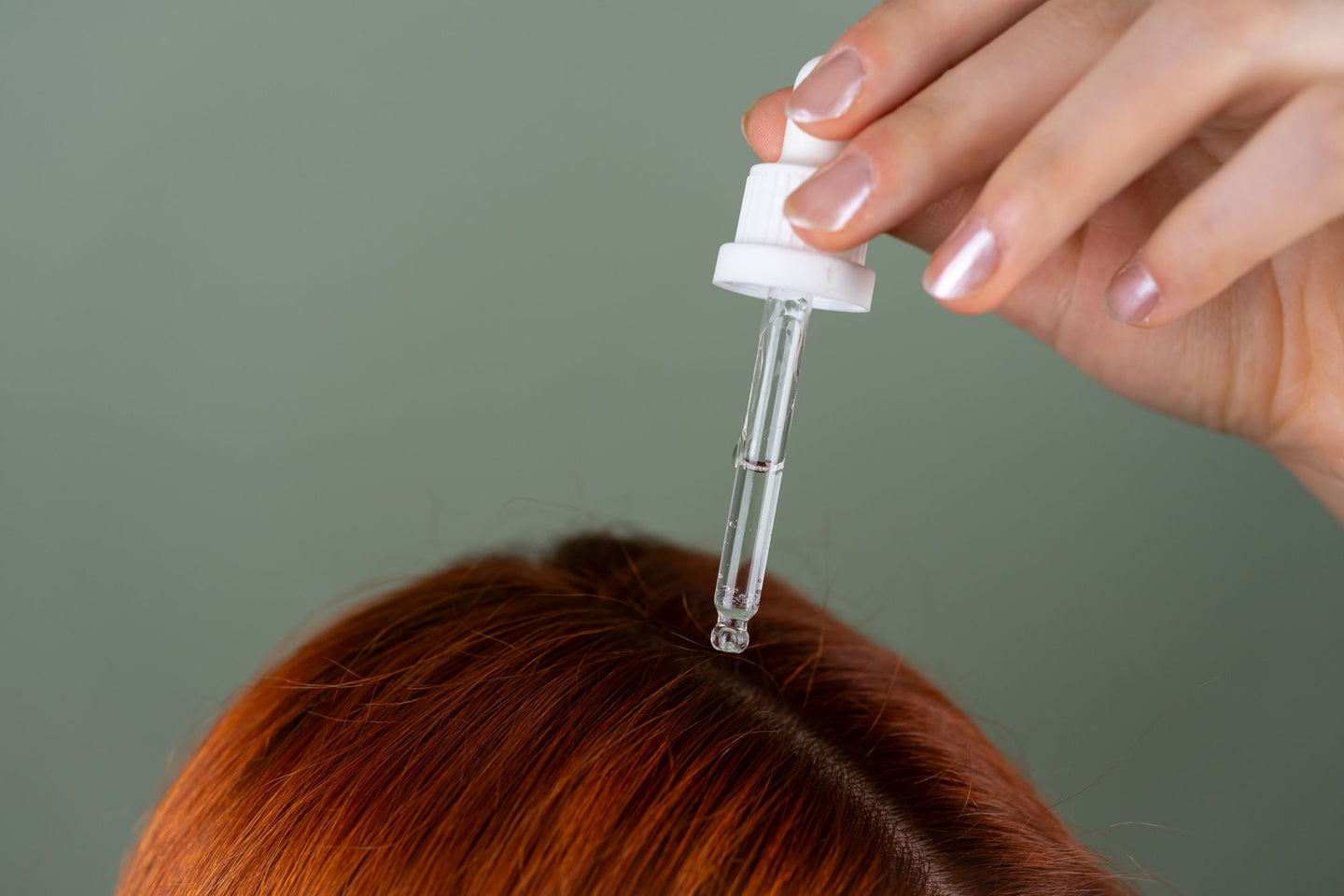
The best choice is the product you can place accurately, wear comfortably and use for a clear purpose. A rosemary preparation may fit a planned oil-care ritual. A lightweight scalp serum may fit a daily no-rinse step. Compare the actual bottles, then use the research to judge the claim behind each one.
Before choosing, decide whether you want an oiling experience, easier scalp-care application, an appearance-focused cosmetic step or treatment of a diagnosed hair-loss condition. Those goals can lead to different decisions even when every option is marketed around fuller hair.
On X, a reader asked about a hair oil's smell and whether it might help menopausal shedding. That is a useful reminder that sensory preference and efficacy are separate questions. Liking the smell cannot establish a treatment effect, and disliking it can still make a routine impractical.
Read the widely shared rosemary comparison carefully
A 2015 randomized comparative trial assigned one hundred people with androgenetic alopecia to rosemary oil or two-percent minoxidil for six months. The abstract reported increased hair counts at six months in both groups without a significant between-group difference. Rosemary-versus-2% minoxidil trial
That finding does not prove universal equivalence. A study that does not detect a difference is not automatically designed to establish that two treatments are interchangeable. The comparator was two-percent minoxidil, not every minoxidil formulation or a five-percent product.
The trial also does not validate every bottle labeled rosemary, every homemade dilution or every cause of thinning. The preparation, population and observation period belong to the evidence. A social-media summary often removes those boundaries while keeping the appealing conclusion.
One X user expressed disappointment, without specifying the formulation or duration:
I tried minoxidil but it didn’t work.
That experience helps explain interest in another format. Compare the actual rosemary preparation or formulated serum by its ingredients, application, finish and evidence, so the next choice has a specific purpose.
Itching was reported in both groups. The finding should not be summarised as rosemary has no side effects, or used to predict which finished product will feel better on your scalp. Tolerability remains part of the choice.
Choose between two different application experiences
Compare the actual preparation and the work it creates. Rosemary essential oil, an oil blend and an extract-containing serum are different preparations; follow the item's instructions and check whether it needs washing out. For fine hair, a product that creates a heavy finish or another wash may be a poor fit on a work morning, while a lightweight leave-in may suit a different schedule. These are practical comparisons, not universal claims about oils or serums.
SUPPORT has a defined once-daily, no-rinse scalp-care role and no rosemary in its current ingredient list. You may prefer that format if you want a focused daily step. If an existing oil already gives you a comfortable cosmetic experience, buying a serum is not automatically an upgrade. Compare one actual preparation with the other rather than buying both to cover the uncertainty.
| Question | Rosemary product | SUPPORT |
|---|---|---|
| What is in it? | Check whether it is essential oil, blend or formulated scalp product | Water-based formula with three peptides, caffeine and niacinamide |
| How does it fit the day? | Follow its own leave-in or rinse-out instructions | Once-daily leave-in, no rinse |
| Does a trial transfer? | Only as far as the tested preparation and population support | No borrowed rosemary outcome or drug equivalence |
| What makes it worth buying? | A wanted, tolerable oil-care experience | A wanted, tolerable lightweight scalp-care step |
Choose for the morning you actually have
Consider a hypothetical shopper who leaves home early and has fine hair. A planned pre-wash product can fit an evening when washing is already part of the routine. A once-daily leave-in can fit another suitable moment, using its own instructions. The shopper records which actual product was used, whether another wash was needed and how the hair looked during the commute. This turns a broad oil-versus-serum debate into a specific choice about the routine they want to maintain.
Ask how the product should be handled and stored. Keep it in its labeled container and follow instructions rather than combining oils, acids and other actives to make a stronger routine. More ingredients do not resolve an evidence gap.
If a product smells appealing but makes your scalp uncomfortable, the experience is not a good fit. Likewise, a formula can be tolerable yet provide no useful cosmetic benefit for your goals. Both results are legitimate reasons to reconsider it.
Keep the scalp condition in the decision
Do not apply optional experiments to broken or irritated skin. Persistent itching, rash, pain or hair-loss patches deserve assessment. An oiling ritual should not delay finding out whether a skin condition needs different care.
FDA guidance explains that plant origin does not automatically establish safety. FDA explanation of botanical ingredient safety That is relevant to essential oils as well as botanical ingredients in formulated products. The choice should not rest on assuming one category cannot irritate.
If you already use a topical medicine, ask about the proposed addition with the exact label available. Do not mix the oil or serum into the medication or independently alter treatment frequency to fit a wash-out ritual.
A clinician can also help clarify the diagnosis if the main goal is addressing ongoing loss. The rosemary trial involved a particular hair-loss population; it cannot explain whether a reader has pattern loss, a temporary shed or another condition.
What a fair Folivis comparison looks like
Folivis 02 / Folivis SUPPORT Hair Growth Serum is a formulated once-daily leave-in for a healthier-looking scalp and fuller-looking hair. Its current ingredient list names Copper Tripeptide-1, Acetyl Tetrapeptide-3, Biotinoyl Tripeptide-1, caffeine, niacinamide, panthenol, red clover extract, zinc PCA and allantoin. Rosemary is not listed.
SUPPORT's directions call for direct application to a clean, dry or towel-dried scalp, gentle distribution across areas of concern and no rinsing. Keep the dropper tip off skin and other surfaces.
Do not apply it to broken or irritated skin, and stop if irritation occurs. No available finished-product comparison establishes that SUPPORT is superior to rosemary oil, equivalent to minoxidil or a treatment for every form of shedding.
Its practical advantage for a shopper may be the defined leave-in routine and a preferred finish. That is a concrete reason to consider it without borrowing a rosemary trial or an unrelated peptide study as proof of the bottle's results.
Make the decision before building a collection
Write down the role, the evidence boundary and the routine burden for the option you are considering. If you cannot explain what outcome you will assess, delay the purchase long enough to clarify it.
There is no requirement to trial both at once. Simultaneous new products make comfort and finish harder to interpret and add cost. Choose an appropriate role, follow its directions and leave medical questions on an assessment pathway.
Choose the actual preparation and routine you prefer, with the claim kept within its evidence. There is no requirement to buy both oil and serum before you can learn which experience suits your day.