Telogen Effluvium vs Pattern Hair Loss: Which Change Are You Seeing?
Sudden shedding and gradual thinning can overlap. Compare the timeline, distribution and care goals before choosing what to do next.
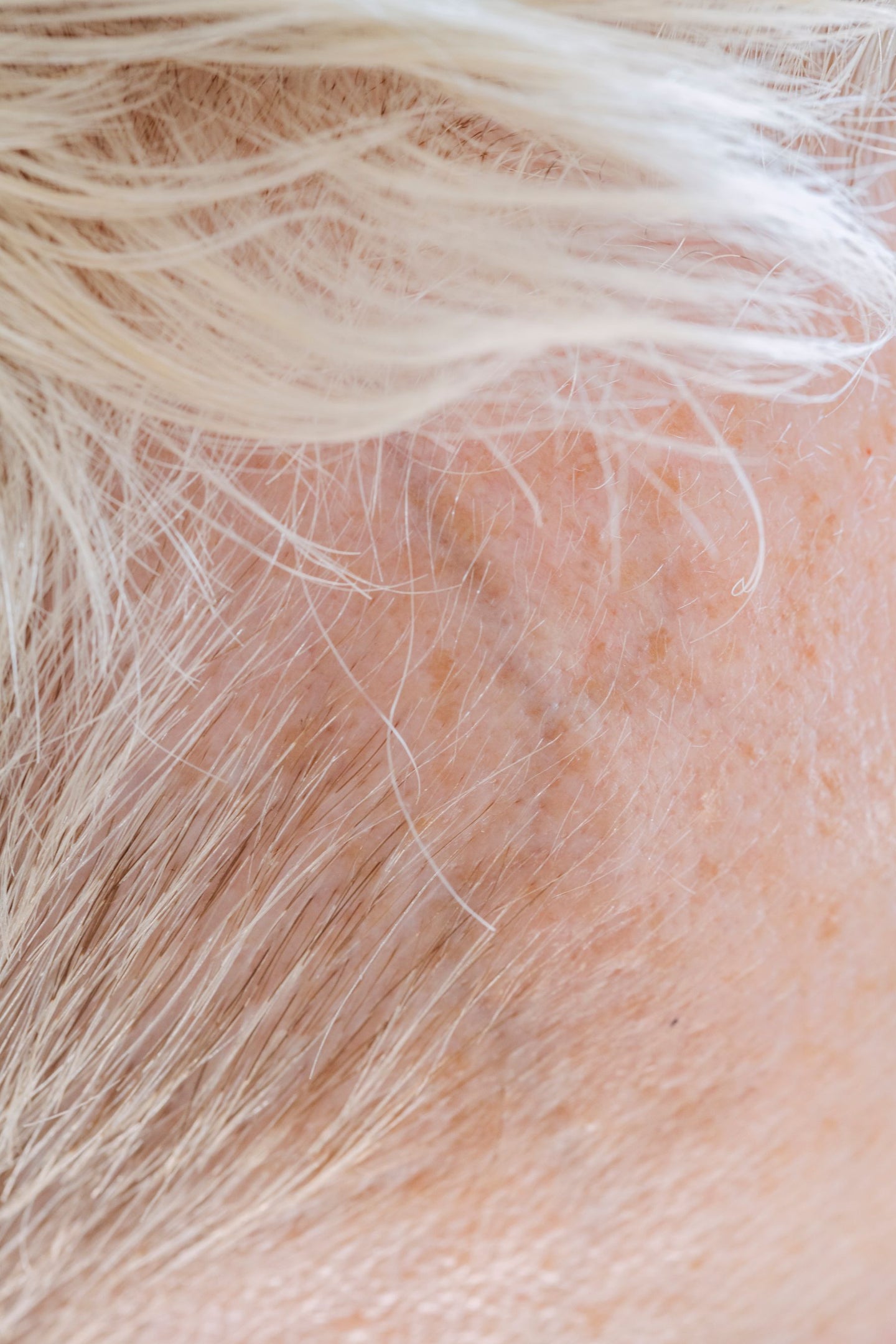
You may have more hair in the shower after an illness, while the part had already been looking wider for a year. Or the shedding may be the first change you have ever noticed. Both deserve a clear account. Telogen effluvium and pattern hair loss can reduce fullness through different processes, and the explanation changes the treatment conversation. A clinician can also find both in the same person.
Compare the process before comparing products
Telogen effluvium involves an increased number of hairs moving into the resting and shedding sequence. Pattern hair loss involves progressive change in the hairs susceptible follicles produce. These are different reasons for the same everyday complaint, “my hair is thinning.” The telogen-effluvium source and female-pattern source explain the distinction.
| Question | Telogen effluvium discussion | Pattern hair-loss discussion |
|---|---|---|
| How did it begin? | Often conspicuous shedding after a delay | Often gradual change in part, crown or hairline |
| Where is it noticed? | Usually a diffuse reduction in volume | Distribution and progressive finer hairs matter |
| What helps clarify it? | Trigger history and scalp examination | Course, distribution and scalp examination |
| What is the care goal? | Address relevant contributors and follow recovery | Discuss managing progression and realistic outcomes |
| Can the other process coexist? | Yes | Yes |
These clues organize the conversation rather than settle a diagnosis. A shedding episode can expose an older coverage change that had been easier to conceal. Tell the clinician about both instead of selecting the label that seems most reassuring or most frightening.
Consider the sequence rather than the loudest symptom. If the part was gradually changing before a sudden shed, say both. If the scalp was stable until a marked illness followed by delayed diffuse loss, say that instead. If there is pain, scale or a distinct patch, those features deserve attention rather than being forced into either column.
A useful clinical answer should connect the working explanation to a plan. With a resolving shedding process, the plan may focus on contributors and reassessment. With a progressive condition, management may involve a longer-term treatment discussion. Cosmetic volume can help daily appearance in either situation, but it answers a different question from whether the underlying process is improving.
You can prepare those observations without choosing treatment in advance. Bring the timing of both increased fall and reduced fullness, because they are not always the same event. That gives the clinician a better starting point than announcing a diagnosis based on a bulb, a short hair or one dramatic wash.
Describe timing before choosing a treatment
Write down when you first noticed increased shedding and when you first noticed reduced fullness. Those dates may be different. Add approximate dates for illness, surgery, childbirth, significant weight change, new medicines or stopping a hormonal medicine. Include events in the preceding months, not only the week before the hair began falling. Use uncertainty honestly if you cannot remember precisely.
Next, describe distribution. Does the change seem all over, concentrated along the usual part, around the temples, or in distinct patches? Is there scalp tenderness, itch, scale or a rash? Are eyebrows or other body areas affected? You are not performing a diagnostic examination. You are preparing information that helps a clinician decide what to look at and which questions to ask.
Bring photographs that show a relevant view and a comparable older reference if available. Avoid treating a wet crown picture and a dry styled picture as a direct comparison. Also describe your handling routine. Tight styles, repeated bleaching or heat damage can add another explanation for reduced fullness, particularly when many short fragments appear.
Why the distinction changes expectations
A temporary shedding process can settle as the underlying situation resolves, while visible volume may take longer to return. A progressive pattern condition may need an ongoing management discussion. Neither explanation provides a universal deadline. The clinician should tell you what course they expect, what would count as a reason to return, and what outcome is realistic for your particular situation.
Ask whether the immediate aim is reducing symptoms, addressing a trigger, slowing progression, encouraging growth or improving appearance. Those goals can be combined, but each needs its own way to evaluate progress. A scalp that feels more comfortable after cleansing does not show that a follicle condition has stopped. Fewer hairs in the drain does not automatically establish restored volume.
This is also why a medication recommended to a forum poster may not be right for you. The diagnosis, age, health history, other medicines and pregnancy plans all matter. If treatment is prescribed, follow that plan and ask before changing it. An article can help you prepare questions; it cannot select your medication or explain every new symptom from a distance.
Tests should follow a reason
Some people need blood tests or another investigation, but the list should come from the history and examination. Asking about iron or thyroid status can be reasonable in the appropriate context. Ordering every test mentioned in a discussion board does not necessarily create a clearer answer. Ask what each proposed result would change about your care.
Bring all supplement labels into that conversation. A restrictive diet, a result near the edge of a laboratory interval and an established deficiency are different situations. Ask which finding would change the plan. The clinical approach uses history and examination to select investigations, rather than ordering every test named in a forum. Read the assessment evidence.
Two histories that need different follow-up
Consider an illustrative first history: an illness was followed by increased all-over shedding, with a previously stable part. The appointment can explore the event, recovery, food intake and whether the current course fits a shedding process. The next review may assess whether release is settling and whether volume follows later.
Now consider a second: the central part has changed gradually for several years, and a recent stressful period added more visible shedding. Simply waiting for the stressful period to pass leaves the older change unaddressed. The useful question is whether a progressive condition and a shedding episode both need attention. These examples show how a timeline changes the decision; they are not patient cases or treatment predictions.
Keep the everyday scalp step straightforward
If you want lightweight daily scalp care while the cause is clarified, Folivis SUPPORT Hair Growth Serum offers a 60 mL leave-in formula with three peptides, caffeine and niacinamide. Its intended cosmetic role is a healthier-looking scalp and fuller-looking hair. That can be a positive routine choice without using the purchase to decide between diagnoses.
Apply once daily to clean, dry or towel-dried scalp. Part the hair so it reaches the areas of concern, distribute gently and leave it in. Keep the dropper tip off skin and other surfaces, recap after use, avoid eyes and broken or irritated skin, and stop if irritation occurs. Coordinate it with any prescribed topical treatment instead of assuming a shared application protocol.
Keep the practical goal visible: a comfortable scalp-care step that fits your day. A smaller drain collection, a smoother finish and a changing part should still be interpreted in their own contexts. If the working diagnosis changes, the clinician can explain what that means for treatment; the cosmetic serum does not replace that review.
Leave the visit with a reassessment point
Before finishing the appointment, ask when to review the plan and which changes should prompt an earlier call. Clarify whether photographs, symptoms or another examination will be most helpful. If the explanation does not account for what you are seeing, say so and ask what remains uncertain. A useful diagnosis organizes care; it should not become a reason to disregard a new pattern or a continuing concern.