Piroctone Olamine Shampoo: Research, Flakes and Cleansing
See what the controlled scalp studies measured and choose a finished wash for the oil, residue or scalp concern you want to address.
Topic: Hair Growth Ingredients: Peptides, Caffeine and More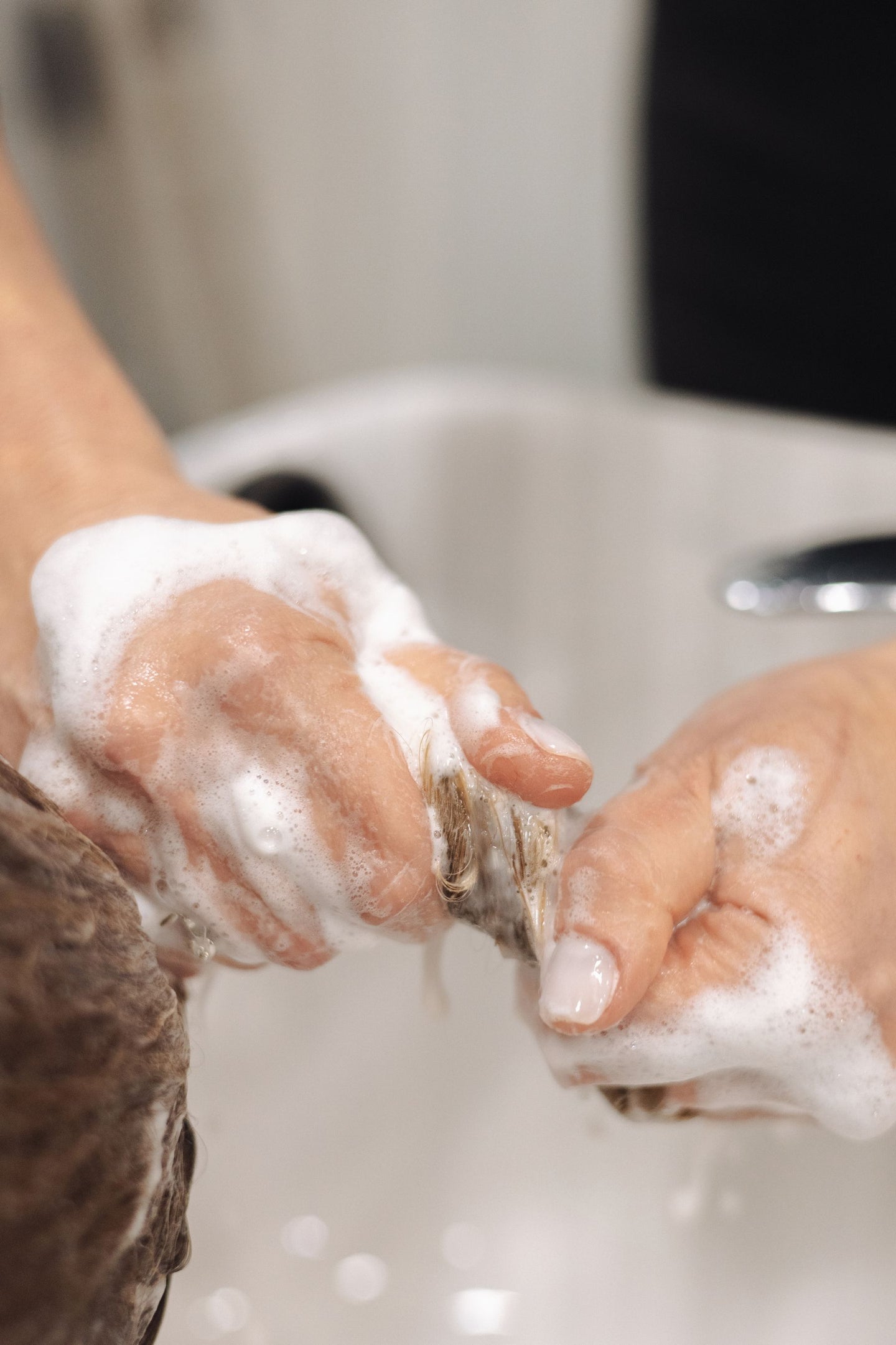
Piroctone olamine is used in scalp formulas, and an eight-week controlled study reported hair-retention and scalp-condition improvements with particular tested preparations. When choosing a shampoo, connect that research to the finished formula and its directions. Folivis RESET Hair Thickening Shampoo includes piroctone olamine in a rinse-off wash for excess oil, buildup and daily residue; the guide below explains the research and that practical cleansing choice.
For someone comparing shampoos, the useful task is to trace a claim back to the product and people actually studied. You can take scalp research seriously while keeping a clear boundary around what it establishes for the bottle in your bathroom.
The starting concern is familiar from Reddit discussions of oily, itchy or flaky roots: people want a wash that feels appropriate without adding an expensive collection of treatments. Their descriptions identify a need for clearer choices. They do not show that one ingredient will address every scalp symptom or form of thinning.
Choose the problem before the ingredient
If the concern is recurring flakes, distinguish ordinary cleansing from treatment. AAD guidance describes dandruff shampoos with defined active ingredients and directions, including options such as ketoconazole or selenium sulfide. Dandruff product choice A cosmetic listing piroctone olamine is not automatically equivalent to those products or a prescription. Persistent or severe flaking may need a diagnosis and a different plan.
If your part or crown is progressively changing, keep that question separate even when the scalp feels cleaner after washing. A pleasant scalp environment and treatment of an identified hair-loss process are not identical outcomes. The right next choice may involve both comfortable daily care and a clinical option, rather than demanding that one ingredient answer everything.
| Main concern | Compare first | Judge the result by |
|---|---|---|
| Oily, coated roots | Suitable cosmetic cleansing | Comfort, rinsing and styling |
| Persistent dandruff-like flakes | A specifically indicated treatment or assessment | The scalp condition and actual treatment instructions |
| Progressive loss of coverage | Cause-specific hair-loss options | Realistic clinical goals, not one wash photograph |
Read the study as a defined experiment
A 2021 study investigated piroctone olamine in an eight-week randomized, double-blind, placebo-controlled design. Female participants described their hair as thinning. The study examined a shampoo and a leave-on preparation, each against its corresponding placebo formulation. Eight-week piroctone-olamine trial
The abstract reports increases in hair amount measured by phototrichogram for both preparations compared with their controls. For the shampoo, it also reports changes in measures of scalp condition, including water loss and oxidative-stress-related markers.
Those details give the finding a shape. It concerns particular preparations, a particular participant group, specific measurements and eight weeks of use. The investigators included authors affiliated with Procter & Gamble and Cleveland Clinic. This context belongs alongside the positive result when assessing its relevance.
The abstract does not identify Folivis RESET as a tested product. It therefore cannot establish the effect size, response rate or timeline for RESET. An ingredient shared by two formulas is a reason to examine the evidence, not a bridge that transfers the whole outcome.
Ask whether you are buying care or seeking treatment
Consider your immediate problem. If roots are oily and weighed down by daily residue, an appropriate cleanser has an ordinary, useful job. If the scalp repeatedly flakes despite sensible care, you may need advice about a scalp condition and the right product category.
Dandruff treatment instructions depend on the specific medicine and active ingredient. A cosmetic formula listing piroctone olamine should not automatically be treated as an approved dandruff medicine in every market, or as interchangeable with a prescribed shampoo.
If there is pain, persistent redness, broken skin or a spreading problem, do not use an ingredient review to postpone assessment. A clinician needs the symptom history and an examination, rather than a conclusion that piroctone must be the missing ingredient.
Likewise, a changing hair pattern may need its own evaluation even if the scalp feels better after washing. Comfort and cleanliness are valuable outcomes. They cannot determine whether a separate process causing thinning has resolved.
A wash-day comparison for fine, coated roots
Start with the result you want to improve. If the roots lose lift as oil and styling material accumulate, give the wash access beneath the hair, rinse through the same sections and assess the ordinary dry finish. Keep the styling products familiar while judging that result. The useful change is a cleaner, more manageable base for the style you want to wear.
If the wash improves root feel but persistent scaling remains, take that second observation to a pharmacist or clinician. You can value a good cleanse while choosing another product category for a scalp condition. This is clearer than repeatedly switching shampoos and asking each new bottle to explain every hair change.
Where RESET makes a concrete choice
Folivis 01 / Folivis RESET Hair Thickening Shampoo contains piroctone olamine within a rinse-off formula also listing salicylic acid, niacinamide, panthenol, caffeine, hydrolyzed rice protein and zinc PCA. Its role is cleansing excess oil, buildup and daily residue.
This may fit a buyer whose fine hair loses lift as roots become oily and coated. The practical comparison is whether the wash cleans effectively, rinses thoroughly and leaves the hair in a condition that works with ordinary styling.
Use it on wet hair and scalp, massage gently into a lather and rinse thoroughly. Repeat if needed. Follow these current directions rather than reconstructing a regimen from the study abstract. The label does not supply a study-matching concentration or contact time.
Do not leave the shampoo on indefinitely in an attempt to reproduce a leave-on experiment. The research included different product forms; their directions are not interchangeable. Washing frequency should also reflect the scalp, hair and tolerance rather than an assumed research schedule.
Make your own observations easier to interpret
Before changing the wash, note what you want to improve in everyday terms. Examples include visible residue near the roots, heaviness before the next wash, or difficulty rinsing a previous product. These are observations, rather than diagnoses or promised endpoints.
After using the new cleanser as directed, assess those same issues. Pay attention to comfort after drying and the following day. Keep the styling products and wash interval understandable enough that a better or worse finish can be discussed clearly.
Avoid counting every hair from one shower as a verdict on the ingredient. The amount collected depends partly on the interval and handling, and it cannot identify the underlying cause. If shedding is concerning, bring the broader timing and pattern to a professional discussion.
If the product irritates the scalp, stop. An antioxidant explanation does not make discomfort a necessary stage. Record which product was used, where symptoms appeared and how quickly they began so that the next decision has useful information behind it.
Why an older shampoo trial measured several outcomes
A 2002 study by Piérard-Franchimont and colleagues compared three shampoos in men with dandruff and hair shedding. Participants used the assigned shampoo two or three times weekly for six months. The investigators assessed shedding, growth-phase proportions, hair diameter and density rather than compressing every observation into one “hair growth” result. These outcomes did not all move in the same way. Original six-month shampoo comparison There was no bland-shampoo control, so changes from baseline should not be read as a placebo-adjusted effect.
That is a useful lesson for choosing a wash. Fewer loose hairs during washing and a change in the diameter of measured hairs are different findings from a higher number of hairs in a scalp area. In that study, density remained unchanged even while other measures improved. A clear description is more useful than turning several measurements into a single promise of denser coverage.
For your own routine, choose the observation that matches the purchase. If you buy RESET to remove oil and styling residue, judge cleansing and comfort under a reasonably consistent wash pattern. If the central concern is progressive thinning, track comparable photographs and obtain an appropriate assessment. Published shampoo research adds useful context to scalp care; the exact formula and the outcome measured still determine what the result means.